What Makes the Hard Ground Barasingha Different?
Barasingha means “twelve-horned,” referring to the multi-tined antlers of the male. Most barasingha in India prefer marshy swamp areas.
The Kanha population is different. These deer adapted to firm, grassy terrain instead of wetlands. That is why they are called hard ground barasingha.
This subspecies is found only in and around Kanha. Nowhere else.That makes its survival even more important.
The Crisis in the 1960s and 70s
By the late 1960s, the population had dropped sharply.Habitat loss, disease from livestock, and poaching reduced their numbers to a dangerously low level. At one point, fewer than 70 individuals remained.
For a species with such limited distribution, that number was alarming.If nothing had been done, extinction was a real possibility.
The Turning Point: Focused Protection
Kanha’s forest department took strong steps. First, they improved grassland management.
Large areas were cleared of invasive plants to restore open meadows. These grasslands are essential because barasingha depend on fresh grass for survival.
Second, livestock grazing inside the park was reduced. Domestic cattle had been competing for grazing space and spreading disease.
Third, strict anti-poaching patrols were introduced. The goal was simple: give the deer safe space and good habitat.
Scientific Monitoring and Habitat Management
Kanha did not rely only on protection. It added scientific planning. Grasslands were actively managed through controlled burning and seasonal cutting. This helped maintain nutritious new grass growth.
Water sources were monitored.Movement patterns were studied.Forest teams tracked breeding success and calf survival rates.Instead of waiting for numbers to improve naturally, they guided the recovery step by step.
Breeding Success and Population Growth
Once habitat conditions improved, breeding rates increased.Calf survival improved as well.
Over time, the population slowly climbed from under 70 to several hundred.
Today, the number is well above the crisis level of the 1970s.Kanha is now considered one of the best examples of species-specific conservation in India.
Creation of Kanha Meadows
One of the key changes was the development and protection of open meadows like:
- Kanha Meadow
- Sondar Meadow
- Bishanpura Meadow
These grasslands are not accidental landscapes. They are carefully maintained.When you drive through these open areas during safari, the barasingha you see standing alert in tall grass are part of this long conservation effort.
Translocation Efforts
To reduce risk from a single-location population, conservation authorities later started relocating some barasingha to other suitable habitats in Madhya Pradesh.This step was important.
If a disease outbreak or natural disaster affected Kanha, the entire subspecies would not be lost.
Why This Success Matters
The hard ground barasingha is more than just another deer.It represents:
- Focused conservation planning
- Habitat restoration done correctly
- Long-term monitoring and management
Unlike tiger conservation, which gets wide attention, this success happened quietly.But in many ways, it is just as important.
What Visitors See Today
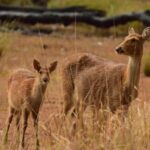
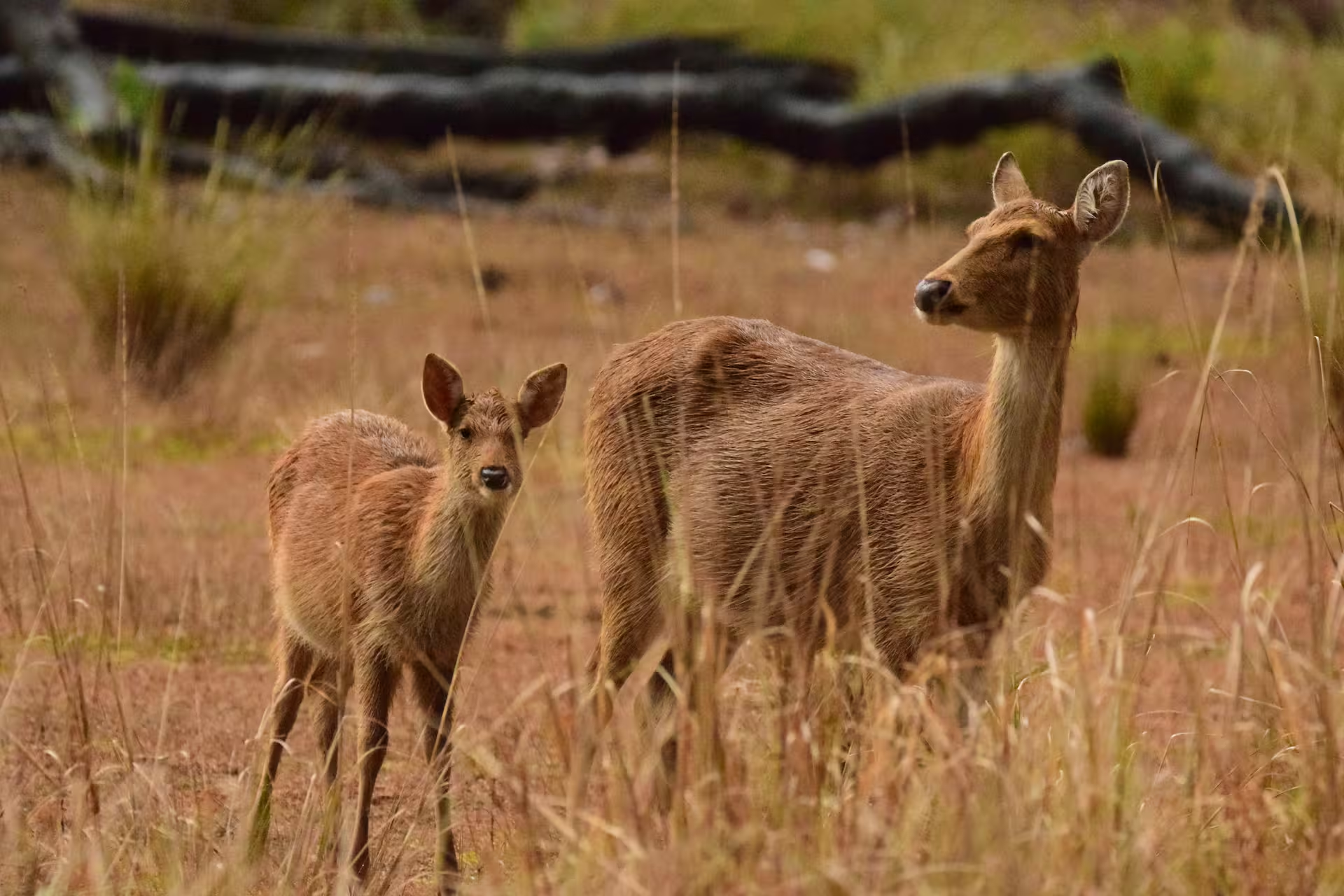
During a Kanha safari, barasingha are often seen in small herds inside open meadows.Males stand tall with branched antlers.Females and calves move cautiously through grass.
They may look calm and common now.But their presence is the result of decades of effort.When you spot one in Kanha, you are looking at a species that once stood on the edge of extinction.
Final Thoughts
Kanha National Park did not just protect forests. It protected a species that exists almost nowhere else.Through habitat management, strict protection, and scientific planning, the hard ground barasingha was saved from disappearing.
This story reminds us that conservation works when it is focused and sustained over time.And in Kanha’s golden meadows, that success is visible every day.